


Best AI Content Creation Tools
The best AI content tool depends on what is slowing you down. Finding an idea, cleaning up an interview, and getting a finished piece published are separate jobs. Buying a tool that generates more drafts will not help much if the real problem is editing the recordings you already have.

OpusClip
8.9
OpusClip finds potential short clips inside podcasts, interviews, and other long recordings, then reframes them and adds captions. For a creator sitting on hours of footage, that first selection pass is the useful part. You still choose which excerpts stand on their own, but you can spend the edit improving a shortlist instead of searching the entire recording for somewhere to cut.

Typefully
8.8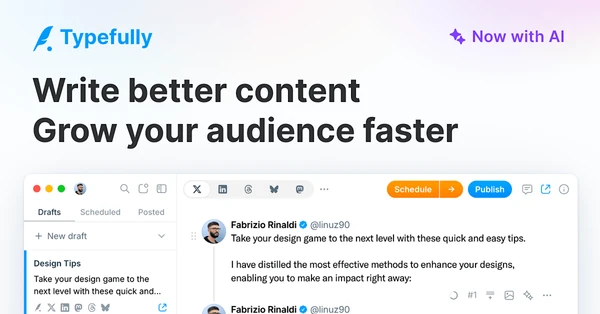
Typefully is an easy recommendation for creators who spend most of their time writing posts and threads. The composer keeps a long idea readable as you break it into individual posts, and scheduling sits beside the draft rather than in another app. AI helps with revisions; analytics show what happened after publishing. It is especially appealing for a regular X or LinkedIn writing habit, where a comfortable editor matters more than a huge collection of content generators.

Blotato
8.6
Blotato connects social content and publishing to your AI agents. An agent can prepare posts, generate visual assets, schedule them, and work with comments or messages through its API and MCP connection. That makes it interesting for a small team building a repeatable content operation around tools they already use. It reaches beyond a conventional posting calendar, so deciding which actions need approval is part of the setup.

Kit
8.6
Kit is a strong fit when an email list supports a creator’s products or services. Forms and landing pages attract subscribers, while tags and sequences connect their interests to the right follow-up. You can publish a newsletter and build a more deliberate path from a free resource to a course or offer. The automation is the reason to compare it closely, especially once different readers need different emails.

SuperX
8.3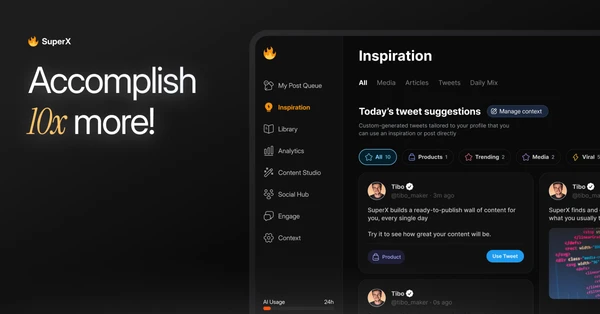
SuperX concentrates on X, with post research, writing assistance, scheduling, and audience analytics in one place. You can find examples around a topic, develop your own draft, and follow its performance after publishing. The narrow focus is useful for a creator who takes X seriously and wants more context about what is working there. A broad social scheduler makes more sense if the main job is coordinating several unrelated networks.

Eden
8.1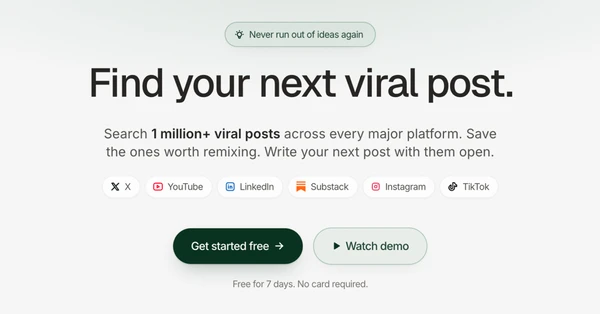
Eden starts with content research: find posts and creators around a topic, study what drew attention, and save material worth returning to. Writing tools and publishing connections help turn that research into your own output. It is useful for creators who have plenty to say but want better context before choosing an angle. The examples give you something concrete to study; your experience is what should make the finished piece distinct.

Gling
8.1
Gling handles the rough cleanup of spoken video by removing silences, filler, and unwanted takes. For a YouTube creator recording regularly, those small cuts can consume a surprising amount of editing time. You review the result and continue with the finishing work. It is most useful on talking-head footage with a clear spoken structure, where the first edit is largely deciding what to remove.

YouMind
7.9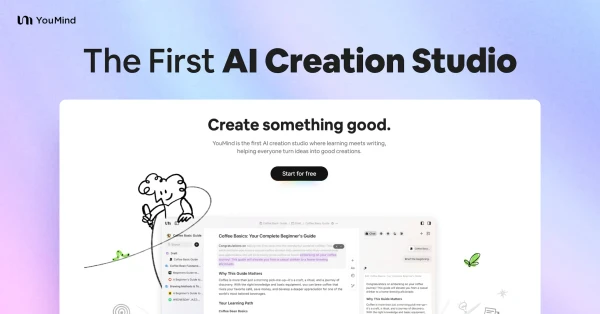
YouMind keeps research close to the work it becomes. Save articles, videos, or documents, explore the material with AI, and develop writing or other output from the same workspace. It fits someone whose creative process starts with reading and collecting sources. Being able to move between the material and the draft is the useful part, especially when a good observation would otherwise disappear into a separate bookmarking app.

Castmagic
7.8
Castmagic turns a recording into written material you can use elsewhere: transcripts, show notes, quotes, summaries, and drafts for other channels. It is useful for a podcast or interview series with more good material than the team has time to repurpose. The recording supplies the substance, which gives the drafts a better starting point than a generic topic prompt. Editing the result is still part of the publishing process.

Repurpose.io
7.7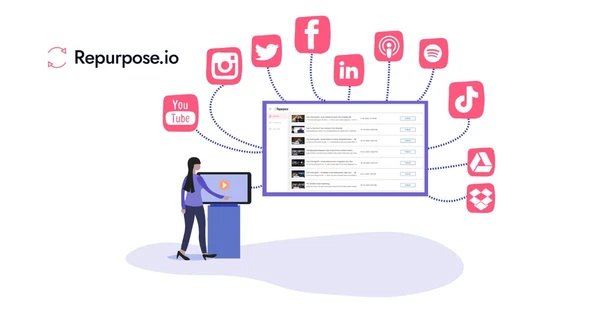
Repurpose.io handles the uploading that comes after content is finished. Connect your accounts and set rules for where a video or image should go, then let the workflow distribute it. For creators posting across several networks, the appeal is avoiding the same download-and-upload routine every day. It fits an established publishing habit particularly well, because you already know which material belongs on which accounts.
Frequently Asked Questions
Which AI tool is best for content creators?
Choose around your main format. OpusClip is useful for finding short clips in longer videos, Castmagic for turning recordings into written material, and Typefully for writing and scheduling social posts. Eden is worth comparing when idea research is the slow part. A creator working mostly in email will have different needs from a video creator.
Can I use AI to create content?
Yes. AI can help outline a piece, clean up a recording, draft captions, and adapt an existing idea for another channel. Give it source material and a clear audience. You will usually get a more useful result from an interview, a product demonstration, or your own notes than from a vague request to write something engaging.
Are there free AI tools for content creation?
OpusClip has a free plan with 60 credits per month, but its clips have a watermark and limited export availability. That is useful for testing the clipping workflow. When comparing free tools, look at whether you can edit and export the finished piece, not just whether you can generate a preview.
Which AI tools can turn one recording into several pieces of content?
OpusClip can extract short videos from a longer recording, while Castmagic produces written assets such as summaries, quotes, and show notes. Repurpose.io can distribute finished content to connected platforms. Those jobs happen at different stages, so choose the tool for the part you are currently doing manually.
Can AI-created content make money?
It can support a business, but producing content is only one part of earning revenue. A useful tutorial may bring in customers, a newsletter may sell a product, or a well-edited clip may introduce people to your work. The audience and offer matter more than whether AI helped make the piece. More output alone does not guarantee more sales.